|
|
 |
|
| Print
this page |
| You are
free to save, print or email the pictures. |
|
Sawbridgeworth Fire Brigade -
Drills and Competitions |
|
Page last updated:
20/03/2021 |
| Fire Drills. |
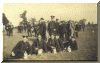 |
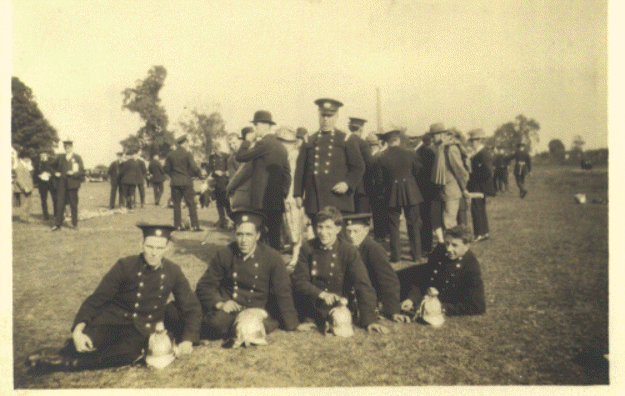
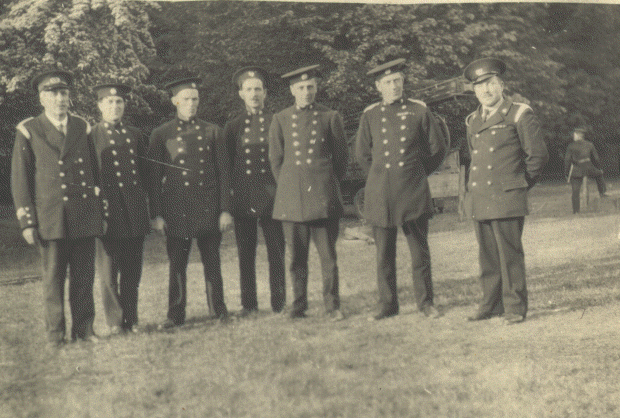
Taking a rest during drilling in the
1920's. In the background 2nd Officer Harry Taylor looks on while
those needing the break are left to right: Bill Horsnell, Bill White,
Frank Wright, Jack Baker and Bill Taylor. |
It is clear that fire fighting relies greatly on
getting things done both quickly and efficiently. This was obviously
realised very early on, presumably even before the 'locally sponsored'
brigades were becoming the modern way to deal with the growing problem of
fire. Certainly
the Brigade in Sawbridgeworth were aware back in 1898 that practice makes
perfect, the AGM that year directing that the Secretary should write to
Commander Wells of the Metropolitan Brigade (later the London Fire Brigade)
asking for permission for the Brigade to attend at one of their drills at
Headquarters Southwark. This was apparently granted with an invitation to
attend on March 29th 1899. The Committee Meeting of the 13th March decided
"that each member actually losing time at his work, shall be paid for such
time, out of the funds of the Brigade and also his railway fare and be
allowed 2/6d for food etc. on the occasion".
In 1903 the National Fire Brigades Union were contacted to determine where
the Brigade could obtain a course of drills. At the19th June 1903 General
Meeting the recommendation was, that contact should be made with Captain
Miller of Leyton Fire Brigade and or, Superintendent Woollard of the Ilford
Brigade. No reply had been received from Supt. Woollard and Captain Millar's
Charge would be £1. 1. 0 plus second class fare - the meeting considered
this cost too high. The Secretary was directed to again write to Supt. Woollard and also to enquire of Messrs. Shand Mason & Co. (steam fire engine
manufacturer) their charge for sending a man. At the General Meeting of the
10th July a letter had been received from Supt. Woollard agreeing to give a
series of drills at an inclusive cost of 10s/6d for each drill
and a decision was made to proceed with six drills commencing at 6.30pm on
Thursday 23rd July. |
Competitions, Trophies & Certificates.
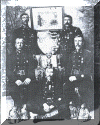 |
The results of early competitions.
It is considered that this picture was taken around 1908 - 1910. This is
based on the presence of a very young Harry Taylor (bottom left) who was
first elected a member on the 12th September 1905 having tried to join before but
having lost the ballot against 3 other applicants. Others in the picture
are - top left.. E. F. (Frank) Wright, Bridgefoot Farm, Station Road
(Uncle of my Father); top right.. Walter Stacey; bottom right..
Walter Tarling?;
centre..? |
 |
|
|
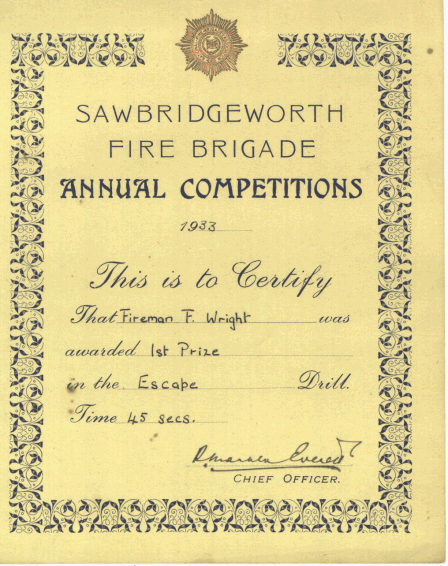
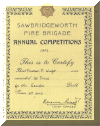
The Brigade's own certificate - 1933
► |
|
By the 1920's competition between the various Fire Brigades, Local
Regional and National, had become a tradition and required the full
commitment of both the current members and any potential recruits. This was
both an opportunity for pride and of course to travel to 'distant places'
for those qualifying to take part. There were cups trophies and certificates
galore to be won and Sawbridgeworth Brigade and individuals had a good share
of these. It must have been a pretty challenging commitment to make at
weekends when one considers the venues of some of the competitions -
Colchester, Essex; Ipswich and Felixstowe, Suffolk; Edmonton, North London
and Bedford were just some of the towns. Considering the modes of transport
available (see picture below) and road conditions at the time, the travelling
time must have been considerable in its own right. There were
closer encounters too, both at Bishop's Stortford and Harlow.
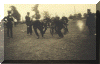 |
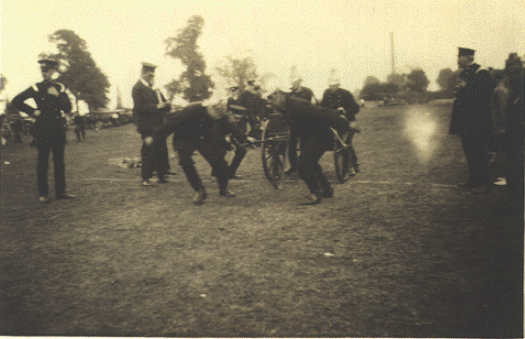
Good
Exercise! Man with a Stop Watch... A Hose Cart, four men and 4 lengths of
hose, a standpipe and a
branch... "Stand-by - Get to work"! |
 |
|
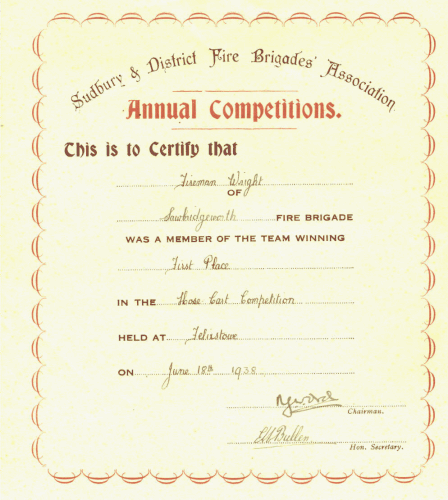
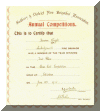
An individual certificate for a team Member
► |
Prize Money The first mention of the
Brigade having won money at competitions is at a meeting of the 27th January
1904 where it was decided that the prize money of 28/- (shillings...£1.40)
won at a competition at Bishop's Stortford should be divided among all
the members of the Brigade. However, by the meeting of the 26th August that
year, more prize money had been won and a total of £3. 4. 0. distributed as
before. In June 1906 it was decided by the General Meeting to purchase a
Prize List Case in which to keep a record of prizes. By 1909 Sawbridgeworth
were running their own Open Competitions and at the Annual General Meeting
on the 25th July 1910 the accounts of both the 1909 and 1910 Whit. Monday
events showed a balance of £50. 15. 9d. It would seem by this time that the
winning of prize money in general had become common place and was no longer
recorded as an 'event'! |
| Day of the week: For many years the regular drill
night of each week was a Thursday but on January 6th 1959 it changed to a
Tuesday. This was at the 'request' of the County. Changing to Tuesdays
enabled joint drilling operations with other brigades in the East Herts area
- e.g. Bishop's Stortford and Much Hadham. |

|
|
|
More Recently.... |
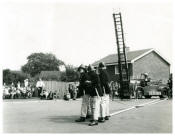 |
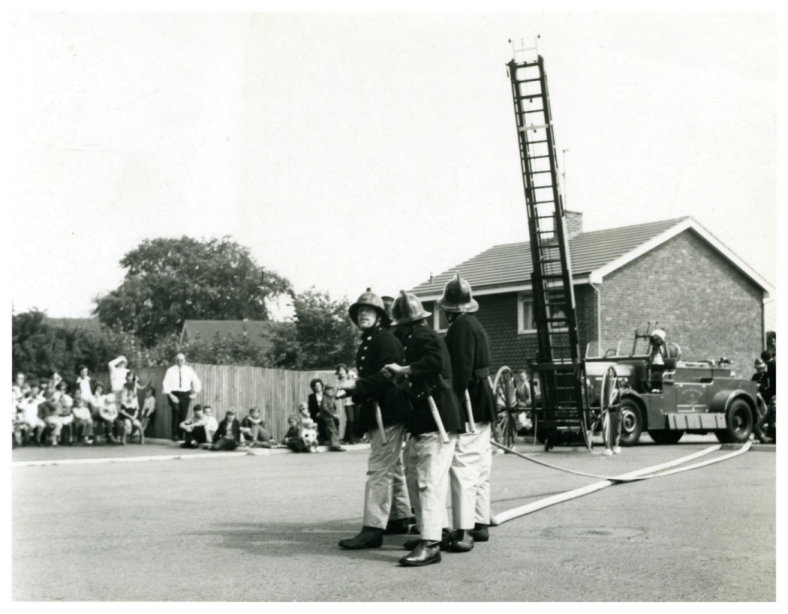
An Open Day at
Bishop's Stortford
(BS) Fire Station in Hadham Road
in the 1970's that shows Firemen
Paul French, David Burrell and Andy Ballisat
possibly Paul Burrell who were then 'Junior'
firemen. They were
representing Sawbridgeworth
station using an old Leyland.
There is one other ex Sawbridgeworth
fireman
in the picture who is the
late Ray Howe who was on
duty on the BS Ambulance that day but is looking on.
Also the late Roy Tomlin is there
in the background who was the Station Officer for
several years.
Photo and
information provided
by Andy
Ballisat
(March 2021) |
|
. |
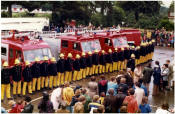 |
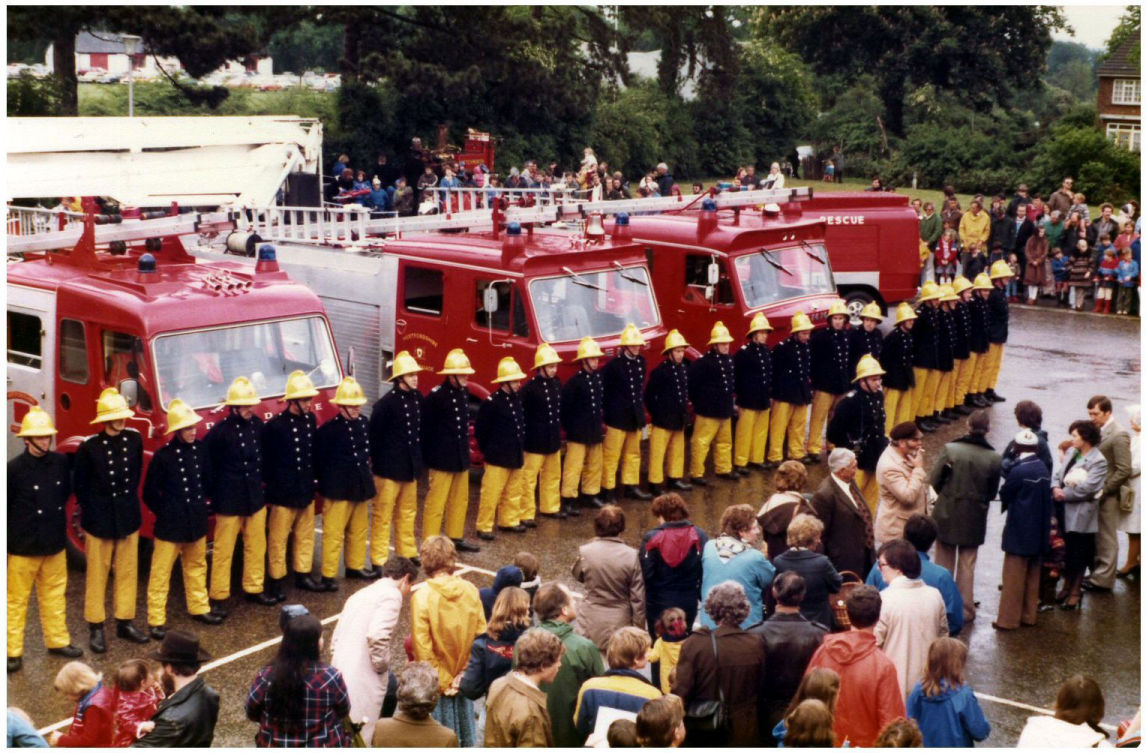
Another, apparently rather
wet, Open Day at Bishop's
Stortford this time in the 1980's. All taking part
including the
Sawbridgeworth crew lined up here
with the Dennis Rolls F Series
NNK 568H Water Tender.
Moving
along the line there are
two Dennis Water Tenders
and NNK 568H is the second one which has a darker
shade of red colour. In the photo is Sub
Officer Keith Woods (BS) facing and addressing the
onlookers. Also in the Photo is Keith's father, in
the brown suit, the retired Sub Officer of Bishop's
Stortford who had earlier succeeded Bert Waterman in
that role. The Letchworth historic Steamer fire
appliance can just be seen in background
manned by a Sid Wheeler and
Assistant Divisional Officer
Dennis Brooker.
The fact that the day was
very wet it was encouraging for all those carrying
out the drills and demonstrations that a good crowd of
onlookers braved the day!
Photo and
information provided
by Andy
Ballisat
(March 2021)
|
| |
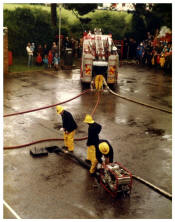 |
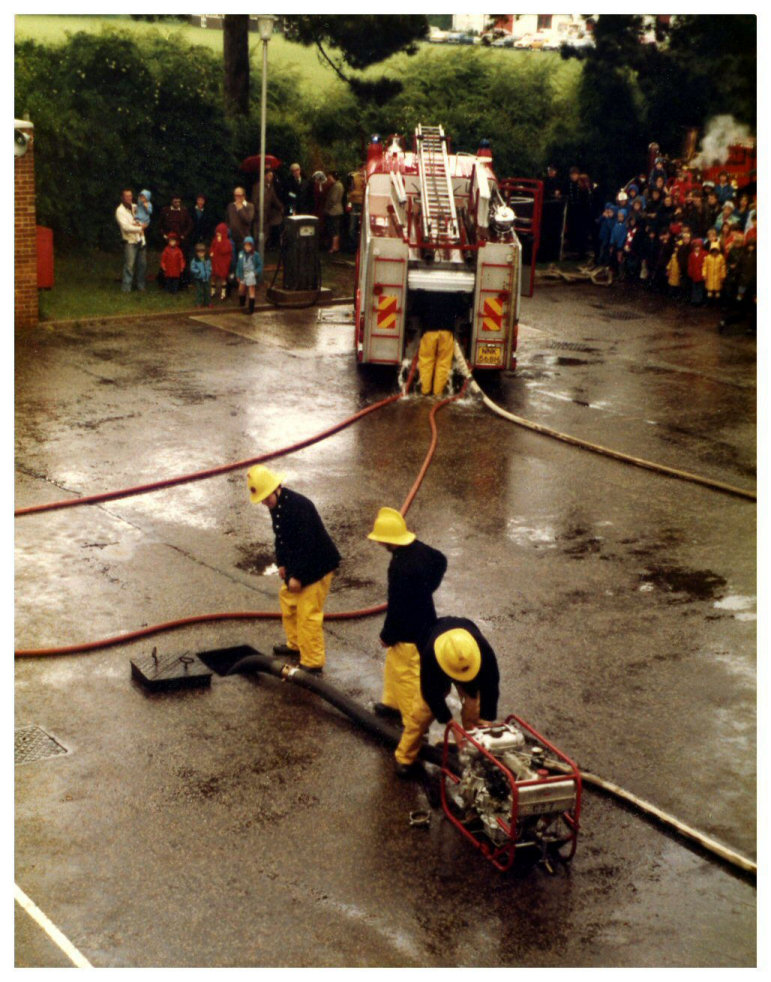
This is the same Open Day of the
1980's and more noticeably rather wet. This
drill/demonstration was by the Sawbridgeworth crew
using their Coventry Climax Light Weight Pump (LWP)
to take the supply of water from the underground
reservoir and relaying the supply to the Main Pump
on the appliance. Leading Fireman Brian Rochester is
the Main Pump operator and Fireman Dave Dellow
operating the Light Weight Pump. Immediately behind
the LWP is Fm Tony kitchener
and looking down the reservoir is Andy
Ballisat. Completing the crew but out of the photo
are Sub/O Geoff Burrell and L/Fm
Peter Roberts.
Photo and
information provided
by Andy
Ballisat
(March 2021)
|
| |
|
|
|
|
|
|
|