|
|
 |
Note: All
of the pictures or documents displayed on this page can be enlarged by
clicking the picture/document itself. If you have Internet Explorer version
6.0 or later you can also save, print, email or further enlarge the picture
from its initial enlarging. |
| Print
this page |
| You are
free to save, print or email the pictures. |
| |
|
Page last updated:
18/11/2023 |
Sawbridgeworth Fire Brigade - Fire Engines |
|
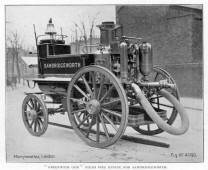 |
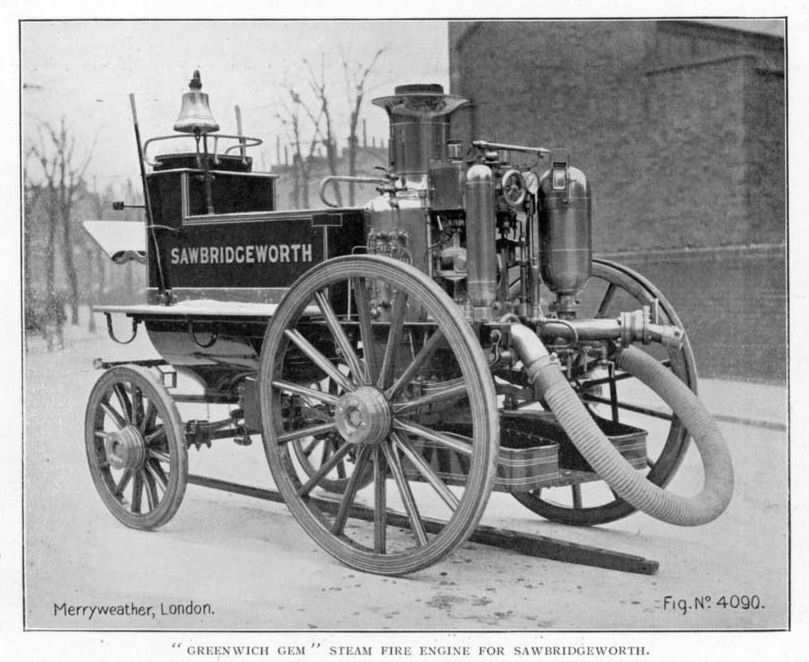
'The' Steam Fire Engine on show.
Sawbridgeworth's first steam fire engine was a Shand
Mason, the only reference to which I can find is in the Minute
Book of the Brigade for the general meeting of the 19th June
1903 where the Secretary was directed to enquire of Shand Mason
whether they could provide a man for Drill Instruction. There
are unfortunately no pictures of this appliance(*) but obviously
Sawbridgeworth had two different Steam Fire Engines, presumably
the Merryweather replacing the Shand Mason in 1912. The cost of
the Merryweather Steam Fire Engine purchased by the Council in
1912 is unknown, but the Brigade contributed £40. 15. 9d from
their funds. The Fire Engine was eventually "disposed of" with a
bad condition boiler in or around October 1937.
The Webmaster
is indebted to Roger Mardon for providing evidence of the
Merryweather records of the supply of the Steamer to
Sawbridgeworth from which the photograph to the left is
extracted. The two pages of the publication "The Fireman" dated
May 1st 1912 are available
here in PDF format. (*)Roger
Marsden later identified that the Shand Mason appliance was a 300 Gallons Per Minute single vertical steamer
supplied in 1878 as published in the Shand Mason & Co's catalogue "Steam Fire Engines, Part 1. |
| |
|
|
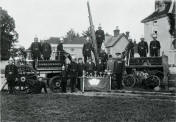 |
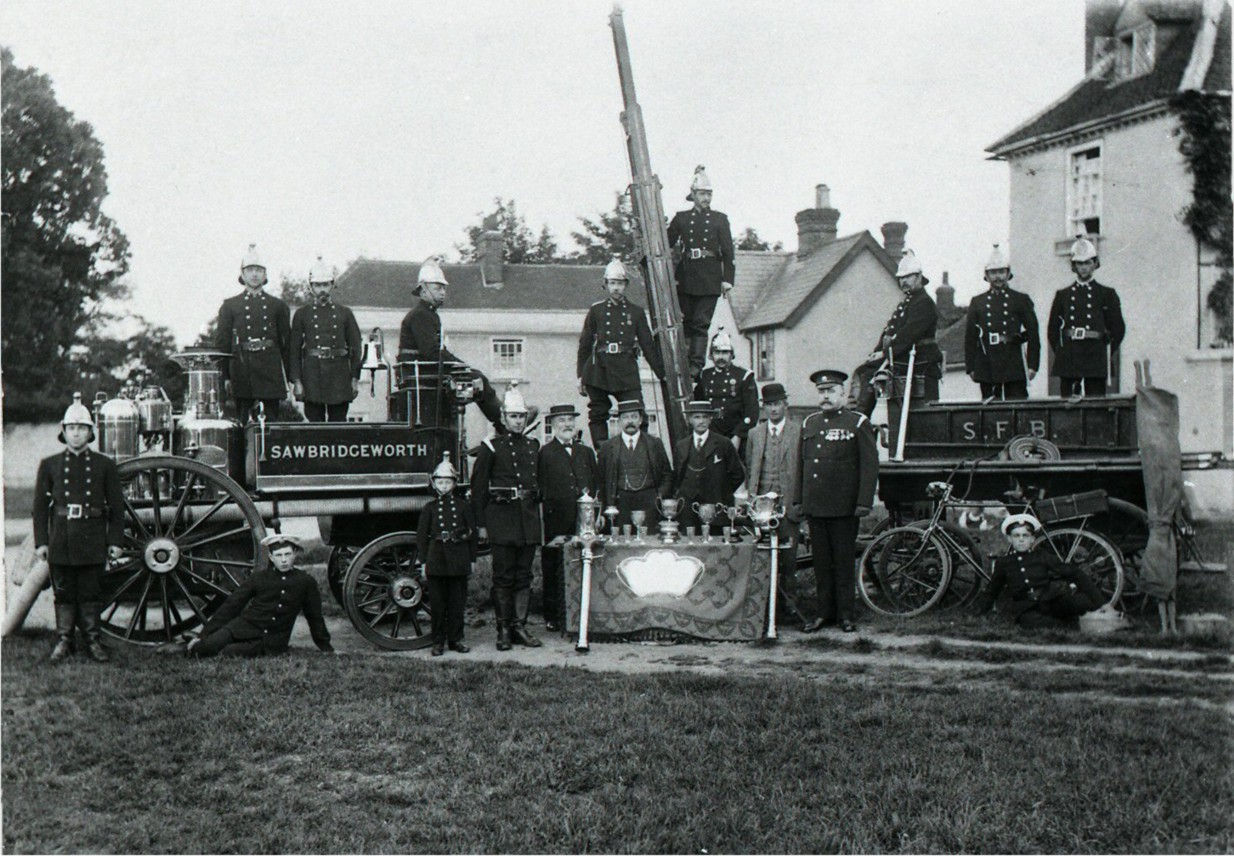
'The' Steam Fire Engine, Wheeled Escape & Manual Pump This 'group' picture taken on the fair Green in Sawbridgeworth is assumed
to be around 1913-1915 related to those that can be recognised. It is the
only evidence available that shows that the town had a Manual Fire Pump for
fire fighting. According to the Minute Book, this Fire Engine was 'disposed
of' to the Government for the sum of £35. 0. 0d in February / March 1918. Much later on
the Brigade had another Manual built in 1844 which was
used well into the late 1940's purely for 'exhibition' demonstrations at
Fetes etc. It is believed this latter one was originally the White Roding or
Leading Roding Fire Engine. (A duplicate photograph is included on the Photo Gallery
page with some names and additional information.) |
| |
|
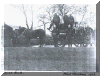 |
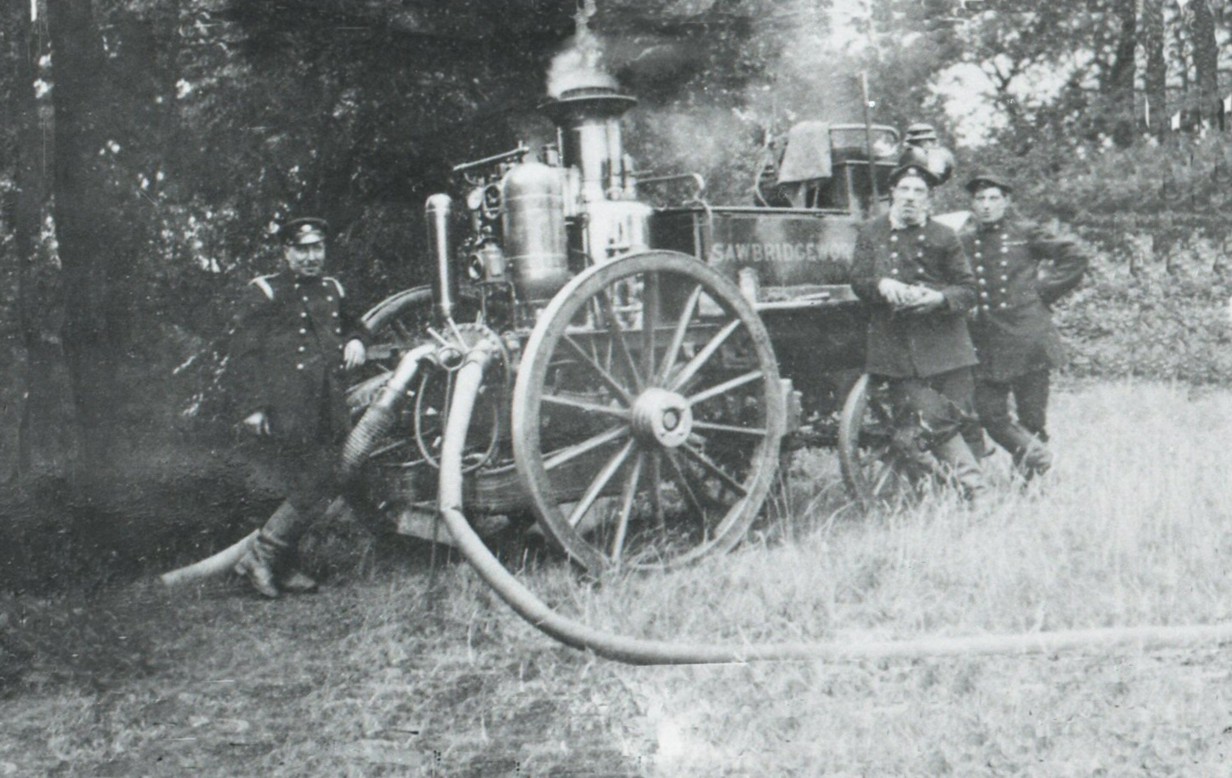
'The'
Steam Fire Engine again, at Hatfield Heath 1913.
(This is a
photocopy of the original photograph because the original is so faded!) |
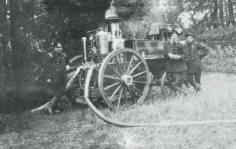 |
The
Merryweather thought to be at Pishiobury Park.
Left Willam (Bill)
Prior; Far right Jack Baker.
(Picture supplied
by John Dear) |
|
|
|
------------------------------------------------------------------------------------------------------------------------------------------------------------------------------------------- |
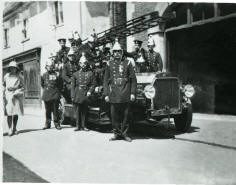 |
Dennis
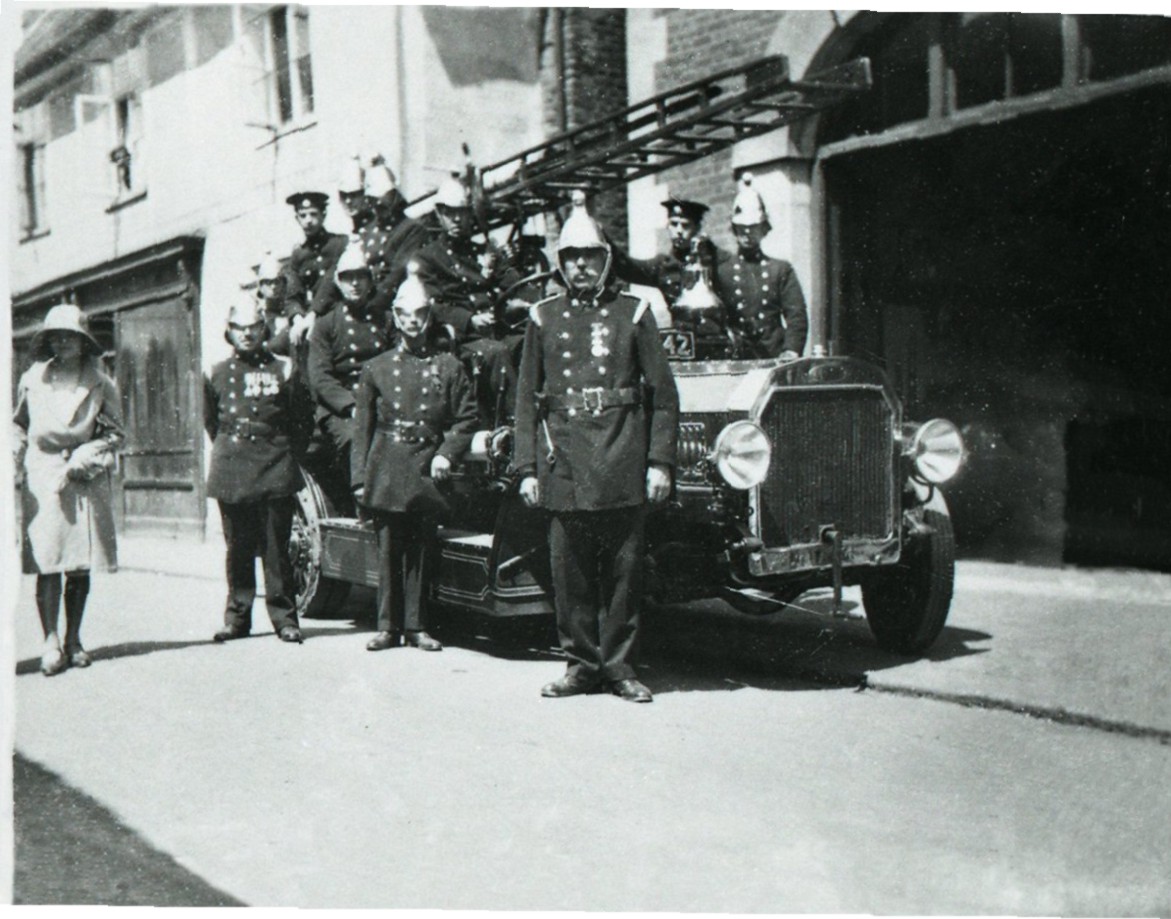
Motor Fire Engine [
More Information
]
There is very little known about this appliance
other than, as can be seen in this picture (when enlarged), that it was a
solid tyre vehicle. Records show that it was purchased second hand by the
Urban District Council in 1928 for £210.0.0d of which the Brigade
contributed £50.0.0d. From the available photographs its registration number
was RN LH 8642. It was involved in a road traffic accident with a lorry at
the junction of Bell Street and London Road on the 6th February 1934 at
around 11pm while on a call to a fire at Exnalls Farm Much Hadham. None of
the crew were injured but the front axle was damaged and the appliance put
out of action. According to a newspaper cutting of the time the
Sawbridgeworth Steamer was then brought back into action and used at the
fire. Back in August 1929 the Dennis was pumping for 48 hours continuously at
the H. A. & D. Taylors R7 Malting fire. The photograph is repeated in
the Photo Gallery page of the Web Site where information is provided on
some of
the Firemen recognised. |
|
|
------------------------------------------------------------------------------------------------------------------------------------------------------------------------------------------- |
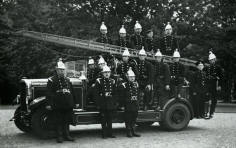 |
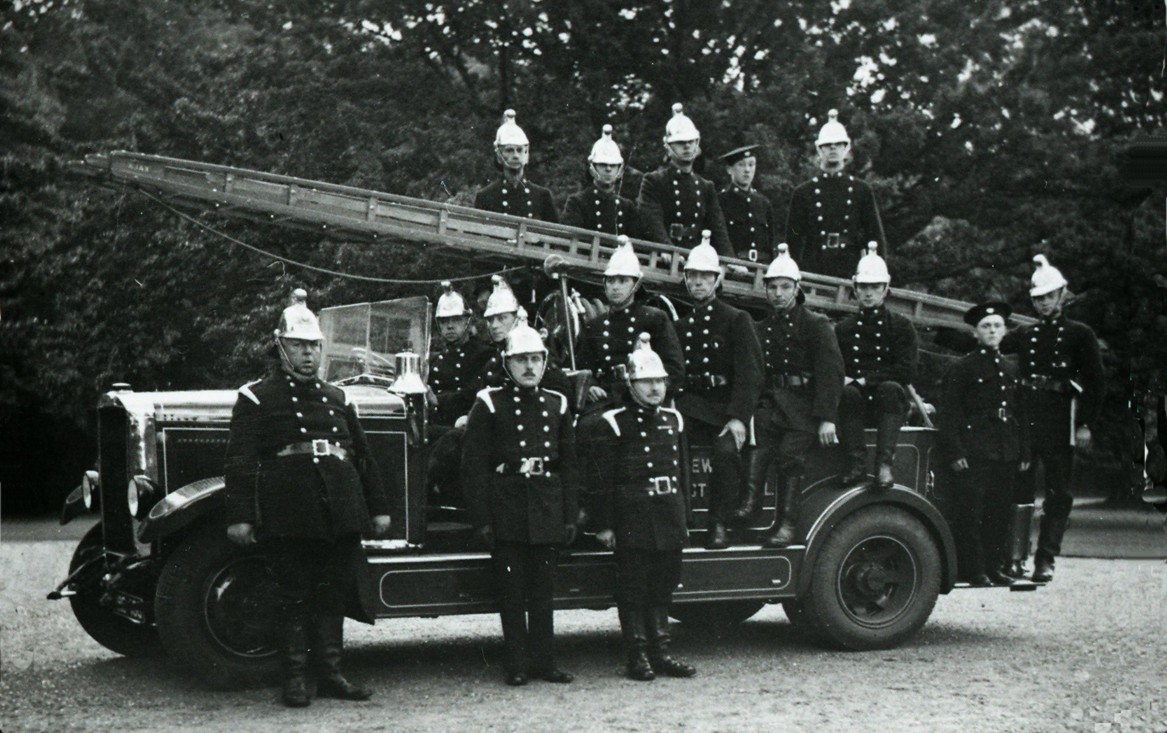
1935
Leyland Cub
This appliance was purchased new by
Sawbridgeworth Urban District Council in 1935. It replaced the Dennis
mentioned above and was soon to be absorbed into the NFS and subsequently
to be taken over by the Hertforshire County Council in 1948. The ladder
was an Ajax 35ft wire reinforced two section extending ladder. The
appliance was fitted with a 500 gallons per minute prop-shaft driven on
board centrifugal water pump and had two
2¾"
hose outlet connections at the rear. It also had a 50 gallon centrally
mounted water tank and a
¾" hose reel
which is visible in the picture. The vehicle registration number was ARO 480. It remained in service at Sawbridgeworth until the 16th September
1954 having done only something like 5,000 miles in 19 years. As with most
appliances of the era it was well embellished with brass but was always
spotless, having had many hours of care, even right to the end. Television
and long distance travel had not yet taken over people's lives after the
normal days work!The photograph was taken by S.E. Mardon of
Bishop's Stortford was taken at Hyde Hall, Sawbridgeworth
soon after the new appliance was supplied. The photograph is repeated in
the Photo Gallery page of the Web Site where information is provided on
the Firemen themselves. |
|
|
------------------------------------------------------------------------------------------------------------------------------------------------------------------------------------------- |
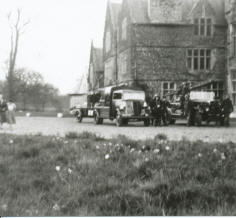
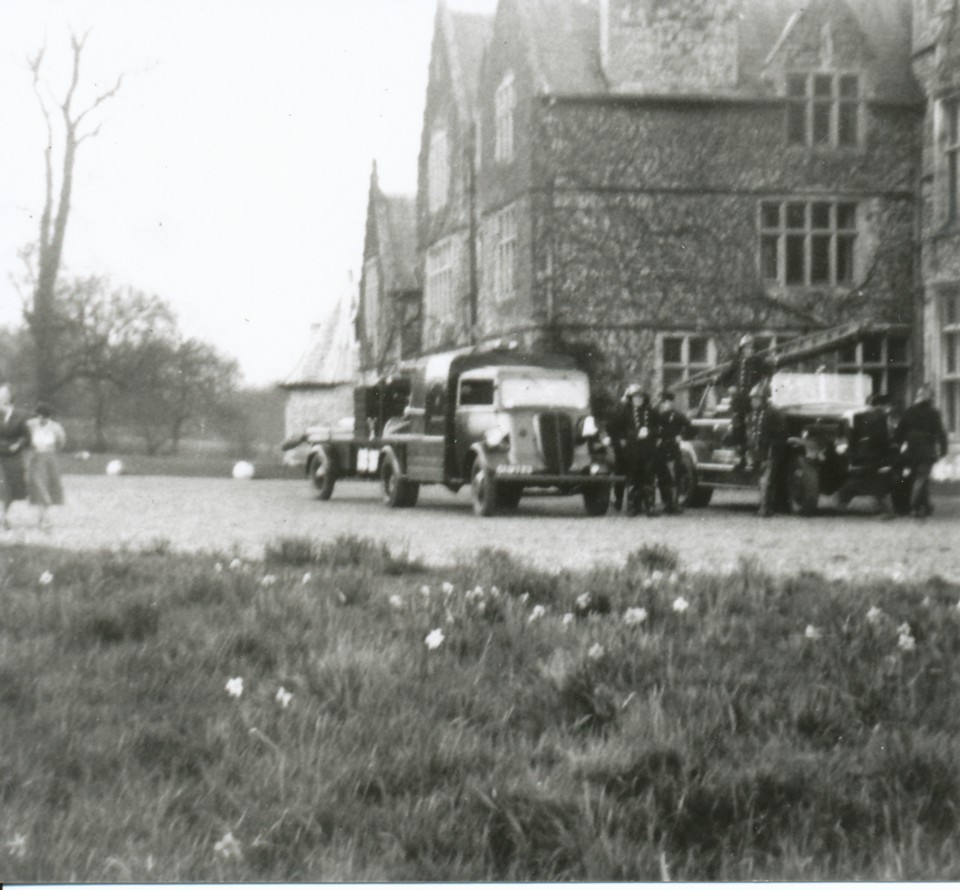
1949 - 1954
Ford (Fordson 7V) Water Tender (Lorry Conversion)
This Water Tender was the first 'appliance' supplied following the transfer of
responsibility for fire brigades from NFS to Hertfordshire County Council and replaced the wartime
Austin Towing Vehicle (TV) that can be seen in the picture of 1948 at the
disbanding of the NFS [Photo Gallery]. With enlargement a little more detail is
visible - this was a very basic ford lorry chassis probably with a loading
capacity of about 5 tons. The bell on the front was manually operated by
the Officer in Charge in the passenger seat via a lever projecting into
the cab - like a swing handle. Immediately behind the front cab was
another cab facing the rear and open - inside it had hinged boxes for basic
equipment (ropes etc.) and on top, seating for the crew. Behind this and
centrally mounted was a 400 gallon water tank and immediately behind that
a small two wheeled self contained 150 Gallon Per Minute (GPM) Coventry
Climax pump, clamped to the vehicle floor. This could be demounted and
lifted to the ground by two men but was normally 'permanently' connected
to the water tank to supply a standard
¾"
hose reel mounted on the rear hose box. At the very rear there was a
vehicle-wide hose box with two rows of 2¾"
canvas hose (some 2½" rubber lined by
this time), one above the other enclosed with a top hinged door. The vehicle
towed a standard Coventry Climax 250 GPM trailer pump (previously NFS
supplied for the TV) and carried a 30'
wood extension ladder. Just behind the rear wheels were mounted 2 gallon
cans of foam - these can be seen in the picture. The whole vehicle was a
bit unstable and had to be cornered carefully as it had a very heavy tail end
and the 400 gallons of water being mounted so high close to the centre of
the chassis!
|
|
The original photograph (just 60mm x 60mm) was taken
at the front of Gilston Park hotel (later being purchased by Smith &
Nephew for offices) by a
friend of the two ladies that can be seen to the left. Being a hotel it
had a predetermined attendance of two pumps, hence both Sawbridgeworth
appliances in attendance. The back of the
photograph is endorsed "From Mrs. E. Jermin & Mrs. F. Archer" and was
taken during the response to a fire call, around 8am, that I believe
related to an incident in one of the kitchens. The photograph was
addressed to Sub
Officer Frank Wright at the Fire Station with a short covering letter that congratulated the
brigade on a very prompt response. Frank Wright is standing to the right of
the Water Tender, hands on hips, and just behind him, L/Fm Len Read.
Others in the picture cannot be identified. It was obviously Spring time
as daffodils can be seen in the grass area. |
|
|
------------------------------------------------------------------------------------------------------------------------------------------------------------------------------------------- |
| 1954 - 1971 |
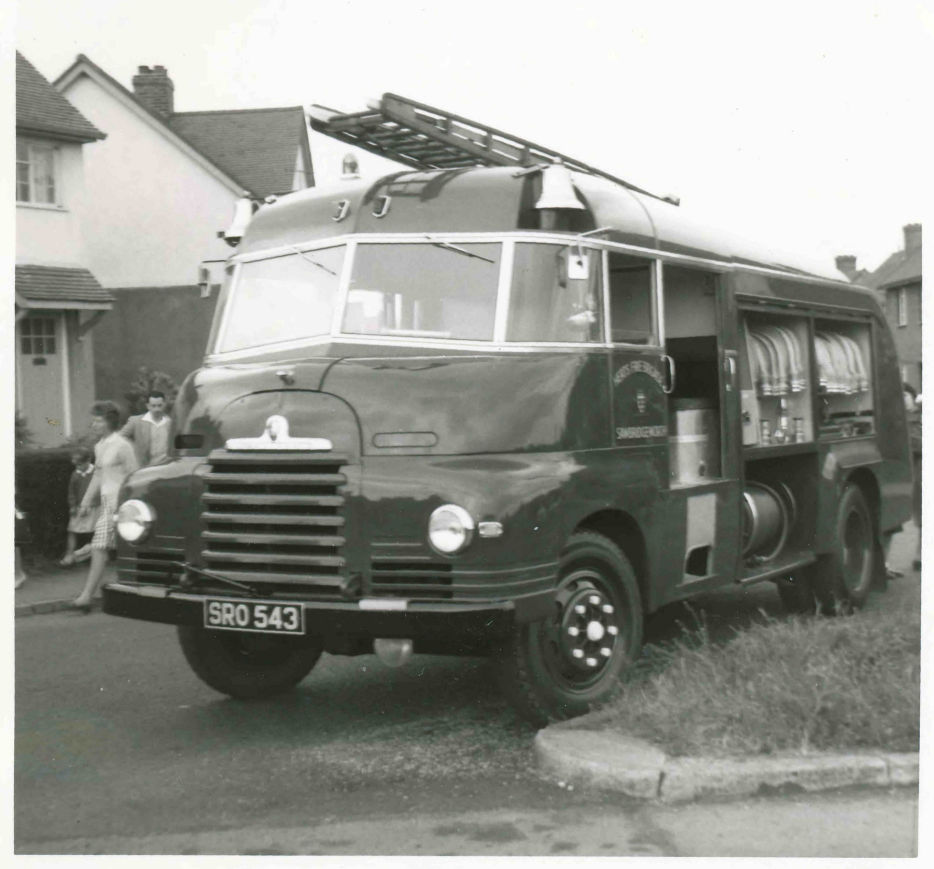
*Bedford
Water Tender SRO 543 (#) Note.
A slight variation of this picture with the crew names, is in the
Photo Gallery.
Although this picture left
was taken on the fair Green in 1971 this appliance was delivered to
Sawbridgeworth on the 16th September 1954 replacing the Ford Water Tender.
This brand new appliance was the first Coach Built Fire Engine since the
Leyland in 1935. It was equipped with two electric bells and 'blinking'
double orange lights mounted centrally above the windscreen. Quite soon
after it was equipped with twin horns, the sound of which became familiar
for emergency services generally. By the time this picture was taken the
wooden Ajax ladder had been replaced with an aluminium one. *Information provided by Roger Mardon, for
which the Webmaster is grateful, indicates its manufactured as a Bedford S
chassis with bodywork and fire engineering by Alfred Miles Ltd of Cheltenham
in that year. |
 |
| |
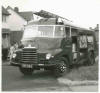 In the picture
left the original Ajax Wooden ladder (supplied with the Leyland Cub ARO 480) is
still in use! Sometime later still it was fitted with a revolving
blue light mounted on top of the cab (**). The first fire that was attended
with the blue light was at Woolworth's Store in Harlow Town Centre - the
only appliance carrying it and causing considerable 'interest' from the
Essex brigades in attendance. The lamp can just be seen in the
photograph which was taken on Monday 11th June 1962 (Log book of that
date) while parked outside of
the Playing Fields at the Sawbridgeworth Whitsun Carnival -Fete. This time the
appliance had to remain on radio call under the rules laid down by Head
Quarters and outside of the actual event field. The appliance had a prop-shaft
driven main Dennis pump which was always primed by the supply from the 400
gallon centrally mounted tank. This was a very stable vehicle to drive in
comparison with the previous ford lorry adaption. It had two hose reels, one
either side and, as can be seen in the picture, hose lockers also either
side. Mounted centrally on the
back, above the main pump, was a Coventry Climax 150 g.p.m. wheeled light pump. This could be
taken off the appliance using two steel ramps. At the same time as the
delivery of this appliance the Brigade were issued with Compressed Air
Breathing Apparatus of which two sets were carried. These replaced the
previous somewhat cumbersome and uncomfortable to wear Seibe Gorman Oxygen
sets. In the picture
left the original Ajax Wooden ladder (supplied with the Leyland Cub ARO 480) is
still in use! Sometime later still it was fitted with a revolving
blue light mounted on top of the cab (**). The first fire that was attended
with the blue light was at Woolworth's Store in Harlow Town Centre - the
only appliance carrying it and causing considerable 'interest' from the
Essex brigades in attendance. The lamp can just be seen in the
photograph which was taken on Monday 11th June 1962 (Log book of that
date) while parked outside of
the Playing Fields at the Sawbridgeworth Whitsun Carnival -Fete. This time the
appliance had to remain on radio call under the rules laid down by Head
Quarters and outside of the actual event field. The appliance had a prop-shaft
driven main Dennis pump which was always primed by the supply from the 400
gallon centrally mounted tank. This was a very stable vehicle to drive in
comparison with the previous ford lorry adaption. It had two hose reels, one
either side and, as can be seen in the picture, hose lockers also either
side. Mounted centrally on the
back, above the main pump, was a Coventry Climax 150 g.p.m. wheeled light pump. This could be
taken off the appliance using two steel ramps. At the same time as the
delivery of this appliance the Brigade were issued with Compressed Air
Breathing Apparatus of which two sets were carried. These replaced the
previous somewhat cumbersome and uncomfortable to wear Seibe Gorman Oxygen
sets.
(**) It will be noted that on the centre front top
of the cab the photo shows two lamps. These were the original
flashing Orange warning lamps as were supplied when new and
delivered to Sawbridgeworth. These no longer functioned when the
blue light was fitted. The appliance double bells were still
also in use - no siren horns at this time either.
Update:
SRO 543 ended it's service time with a
purchase by L/Fm Graham Joiner based whole time at Cheshunt
Hertfordshire, living in a service house near to the Station he
was allowed to keep this on their drill ground. However during the long Firemen's strike of the 1970's he was
targeted by strikers as he remained in service and SRO 543
became a victim of the actions of these strikers and was badly
damaged. When Graham was last contacted he mentioned that he
had subsequently sold it on to a Circus for use in washing down
their Elephants.
Update... With thanks to Andy Ballisat (Ex
Sawbridgeworth Fireman
with overall service of 30 years) for the
information (December 2020) |
|
------------------------------------------------------------------------------------------------------------------------------------------------------------------------------- |
|
1972 - 1980 |
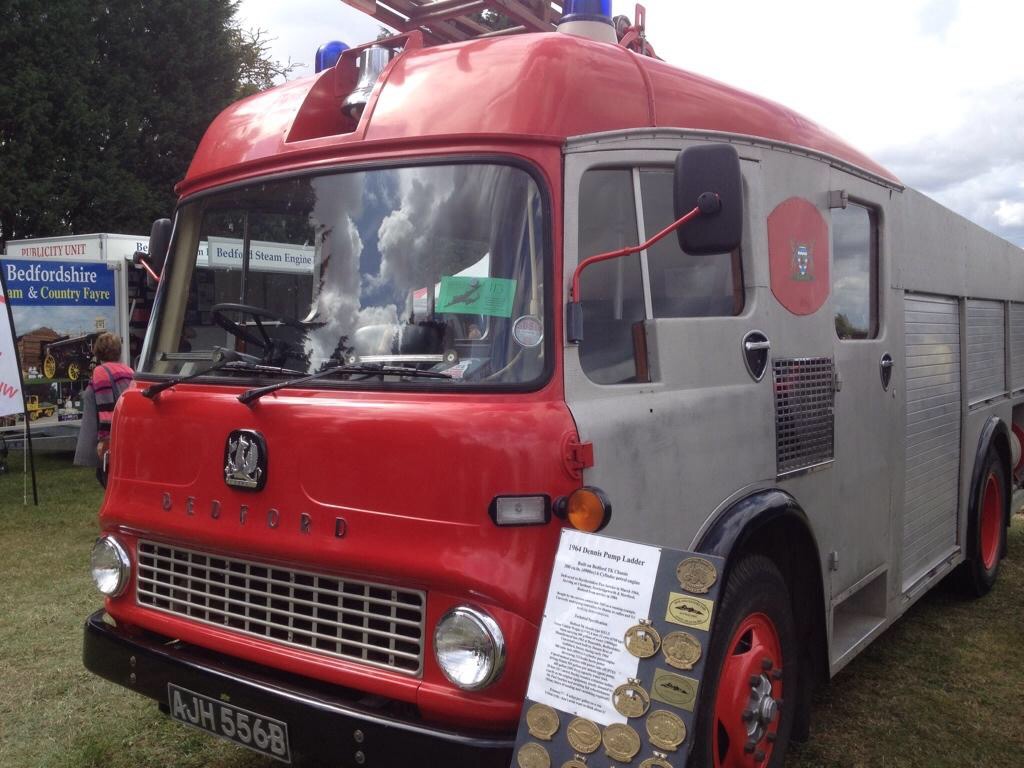
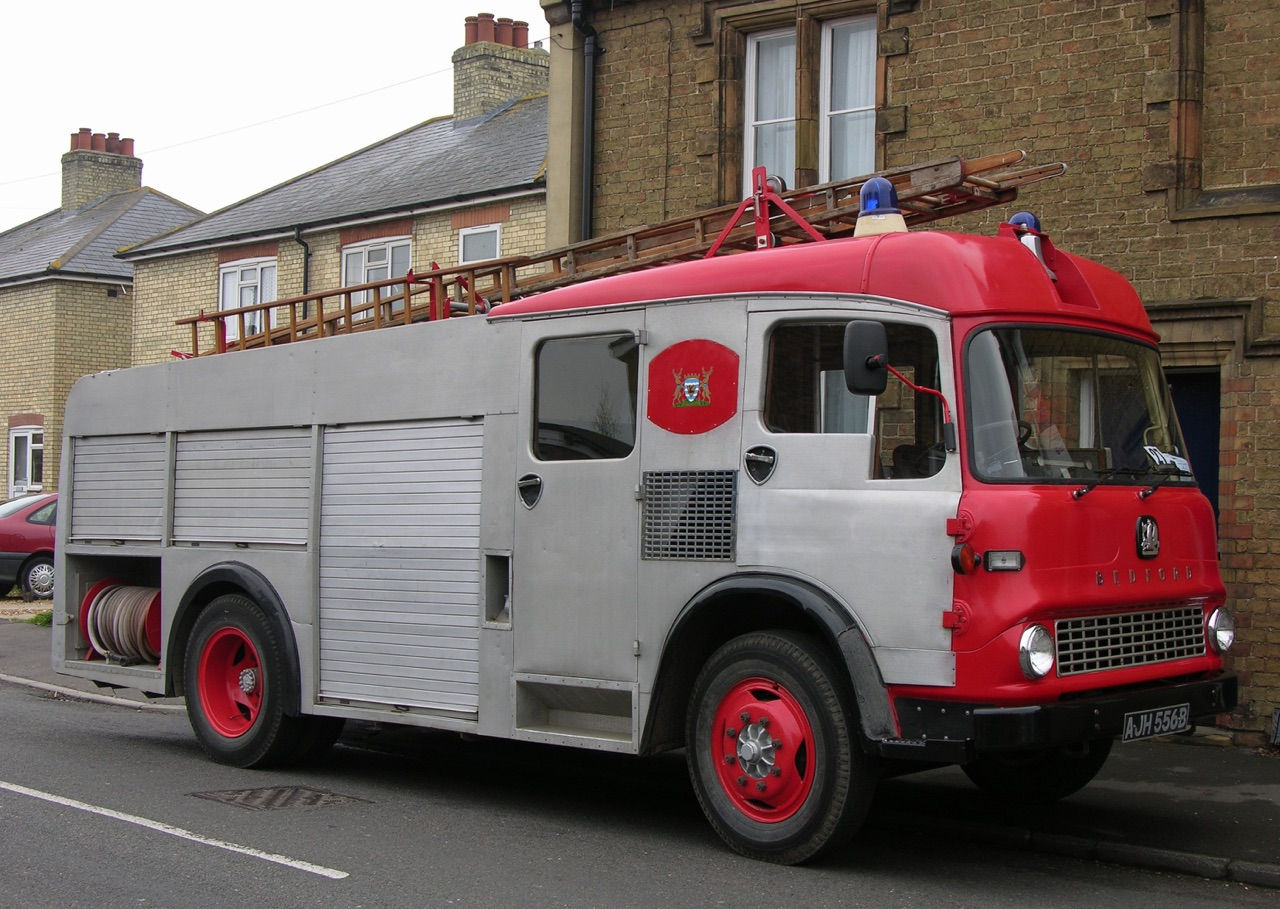
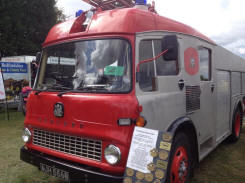
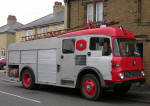
It is apparent that a 1964 Bedford TK Miles 1964 TK (type
KELZ) chassis with a 300 cubic inch (4.9 litre) straight six
petrol engine - 4 speed manual gear box, with a Dennis 133 by,
500 gpm pump (AJH 556B)
replaced the previous Bedford in 1972 and was at
Sawbridgeworth up to 1980. As can be seen the
photograph is not local but of the appliance having been
preserved and on show at an air show having been
photographed by Simon Lincoln, Hertfordshire Fire
Brigade.
(See
also Archive Photo) |
 |
 |
|
|
------------------------------------------------------------------------------------------------------------------------------------------------------------------------------- |
| 1981
- 1988 |
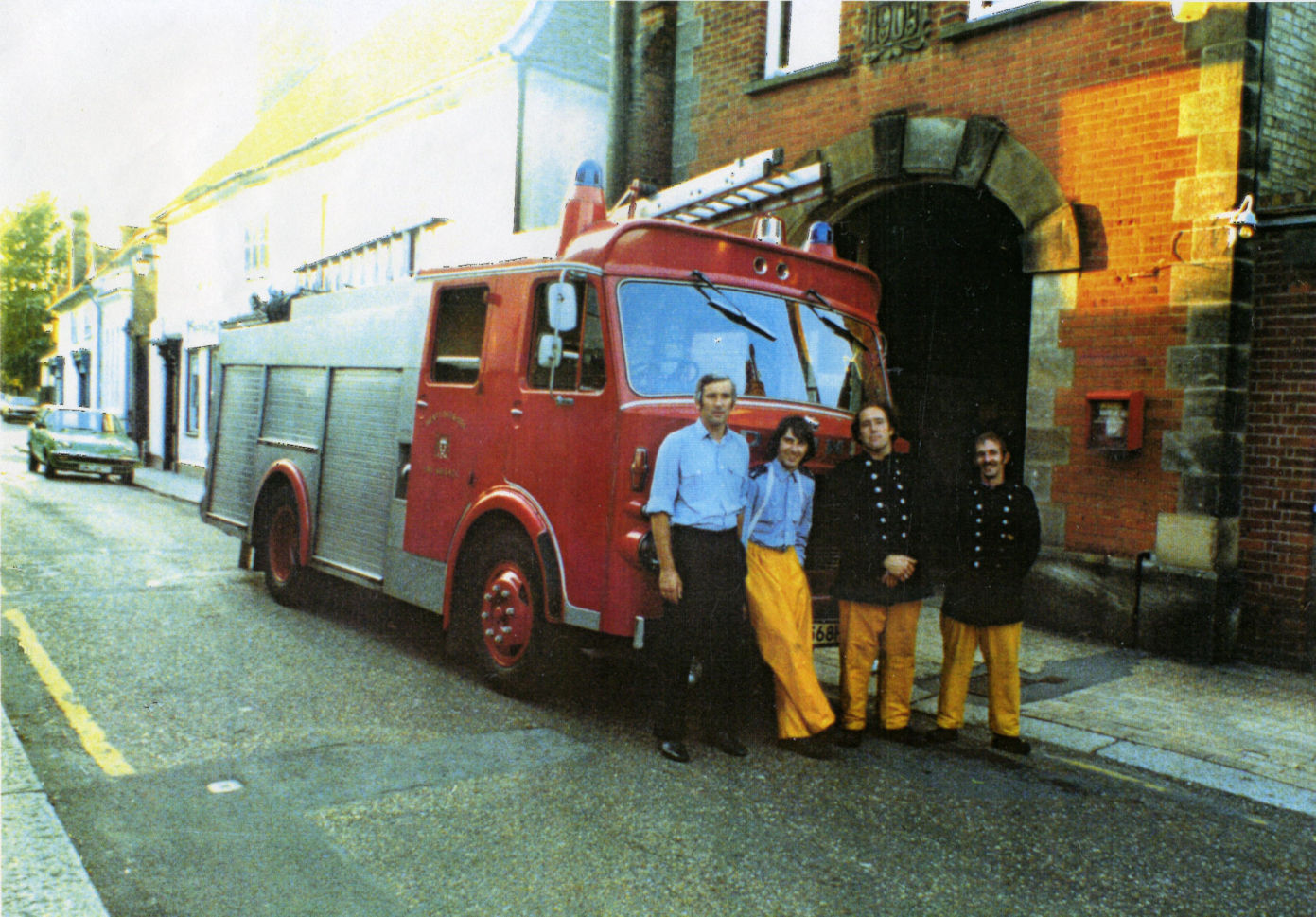
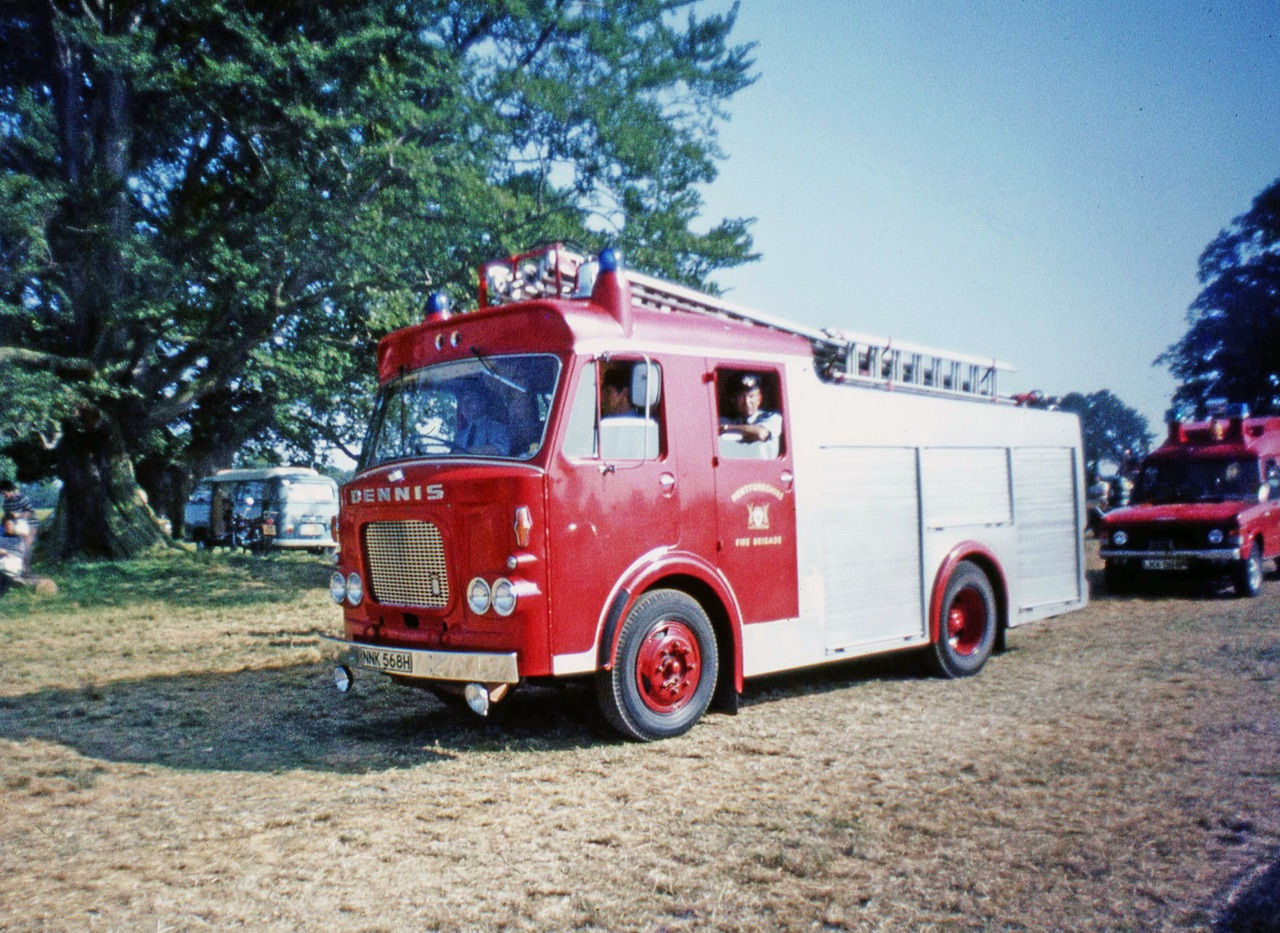
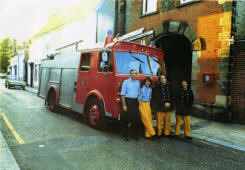
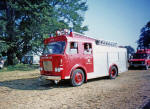
Far left and right... A 1970
Dennis F46
NNK 568H which
replaced AJH 556B in 1980/81. It is seen here
outside the Church Street Fire Station with Sub
Officer Dave Dellow, Phil Maiden, Andy Ballisat
and Tony Kitchener. Date unknown. Served at
Hatfield before Sawbridgeworth,
1970 Dennis F46 8 cylinder B81 Rolls Royce
petrol engine, narrower appliance at only 7'
wide.
Believed to have been exported out of the UK
(Data obtained from DVLA). |
 |
 |
|
-------------------------------------------------------------------------------------------------------------------------------------------------------------------------------
| 1980's |
|
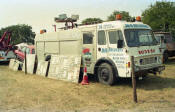 |
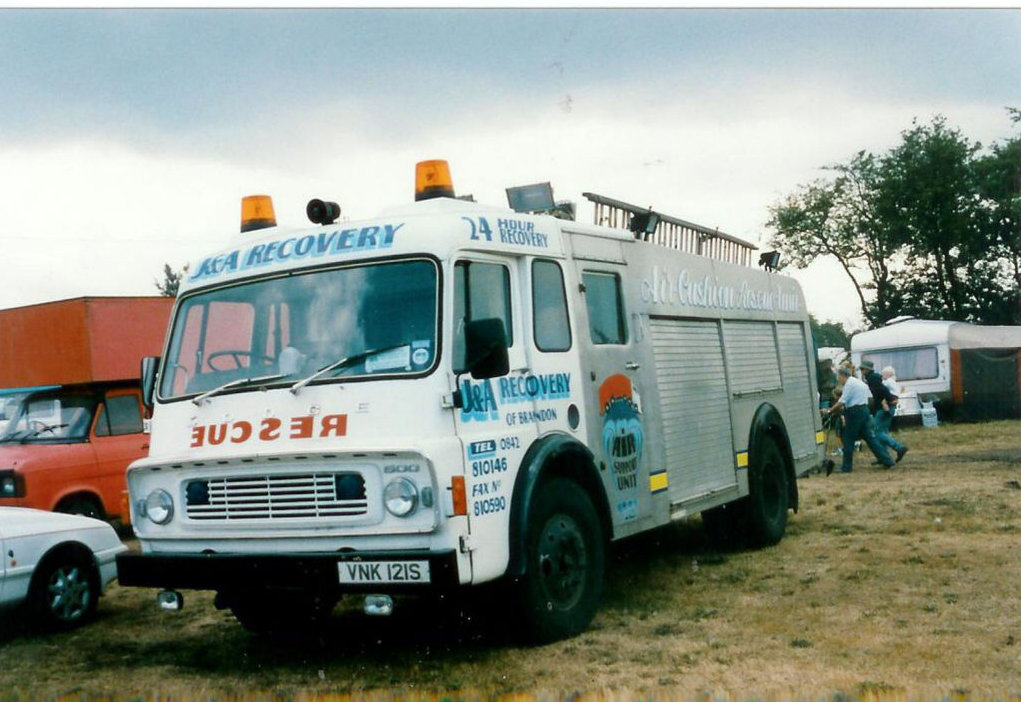
Prior
to the introduction of the New Appliance below the
appliance shown left, a Dodge with an HCB Angus Body
VNK 121S, was on station. It would seem as an
interim appliance, which was apparently ex Bishop's
Stortford. The Photograph was taken at
the Weeting Steam Rally near Brandon, Norfolk in the
mid 1990's. An organized coach trip there from the
Town to this Rally included a few men of the station
and their families. All seemed surprised to see it
as this appliance is thought to have left Sawbridgeworth
around 1987. As will be clear, the appliance had
been adapted considerably to a Rescue Recovery
vehicle based, it would seem, in the local area.
With thanks to Andy Ballisat (Ex Fireman
1972- 2002) for the
information and his photograph
-
(December
2020) |
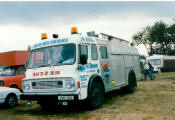 |
Another photo of this
vehicle at
probably a different show.
With thanks to Simon
Lincoln
Hertfordshire Fire Brigade
(December
2020) |
|
|
------------------------------------------------------------------------------------------------------------------------------------------------------------------------------- |
| !990's |
|
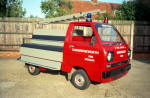 |
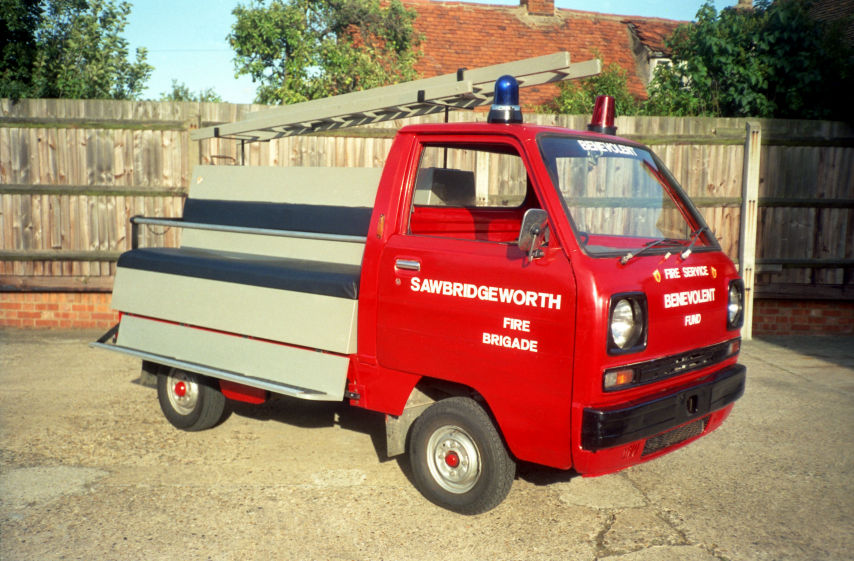
This
Honda 'pseudo
Fire Appliance' photo
was taken by Andy Ballisat in
1996.
This little truck was
given to the Station for the purpose of
raising money for the then Fire Services
Benevolent Fund, now Fire Fighters
Charity. It
was new to the local business of Emery's
Electrical in London Road and the Late
Fireman Brian Rochester was instrumental
in this as he was employed there and
concurrently a Non Serving Benevolent
Representative. It is fairly certain
that this vehicle was gifted by Jeff
Emery himself but it cannot be certain
if money was exchanged. If it were a
gift that was very generous indeed!
This was kept for a
few years in the main bay shared with
the station's main appliance but later
housed in the end bay.
It was originally a
pick-up but was converted to what is
shown and the woodwork was the craft and
skill of the then serving F/m Tony
Kitchener who was a fine carpenter &
joiner by trade.
L/Fm Richard Oakley
who was a serving Benevolent
Representative undertook the mechanical
work, a mechanic by trade. Brian
Rochester himself spent many hours on
preparing for painting and then finally
painting it among some electrical jobs.
These three personnel
were the most involved in it's creation
with most of the other serving members
doing the odd job here and there and
taking it out.
As for getting the finished vehicle to
shows and open days etc. there was a
trailer and the Honda was mainly kept on
it.
Toward the end of it's existence it
was fortunate to have the use of Ian
Fern's (of Ian Fern Motor Vehicle
Engineers of Takeley) VW LT Beavertail
vehicle to convey it around.
On attending an open
day at Stevenage a good amount of money
was raised together with that over a
good few years. Unfortunately this
method of raising money came to an end
due to the Health and Safety involving
the "Children's'
Rides" as there were no seatbelts or any
harnesses fitted.
10 to 12 children
could originally be carried around on each ride.
With thanks to Andy Ballisat (March
2021) |
| 1999 |
|
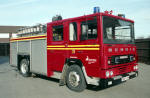 |
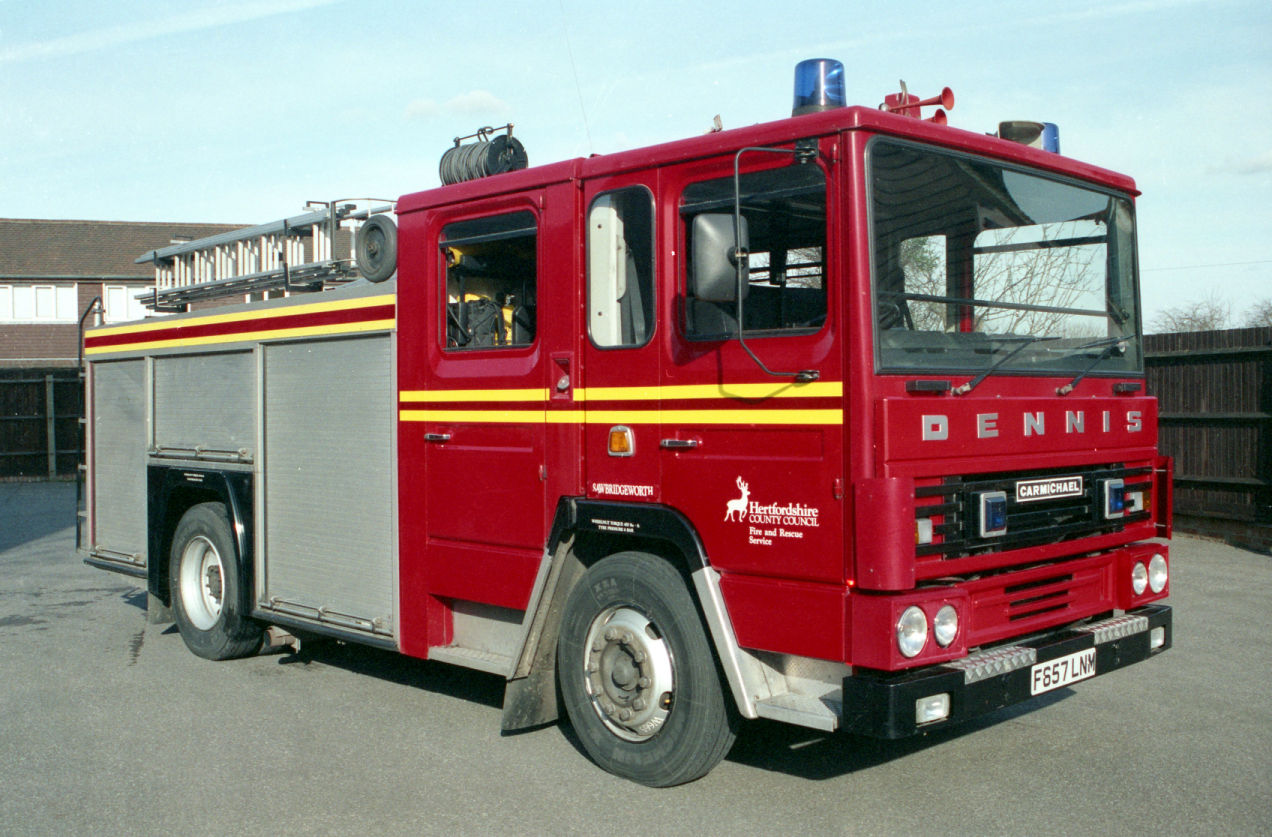
In February 1999 this Dennis SS
appliance F657 LNM was brought in to cover for
the routine maintenance of E808 BMJ DS
below. However, the temporary cover
lasted a little longer than was
scheduled as the DS when returned from
the County Workshops was showing damage
to the paintwork and had to be returned
to workshops for repainting! |
|
|
------------------------------------------------------------------------------------------------------------------------------------------------------------------------------- |
|
|
1988 - Aug 2000 |
 |
| The
Sawbridgeworth appliance |
|
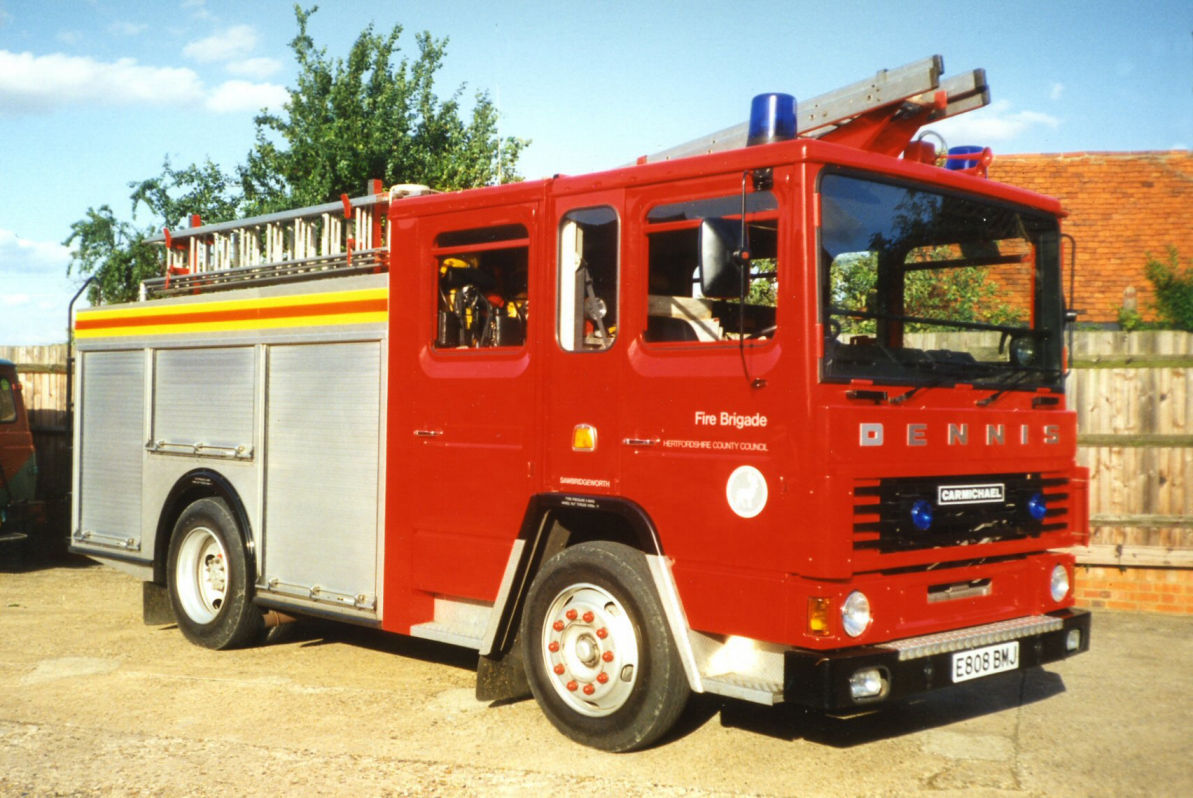
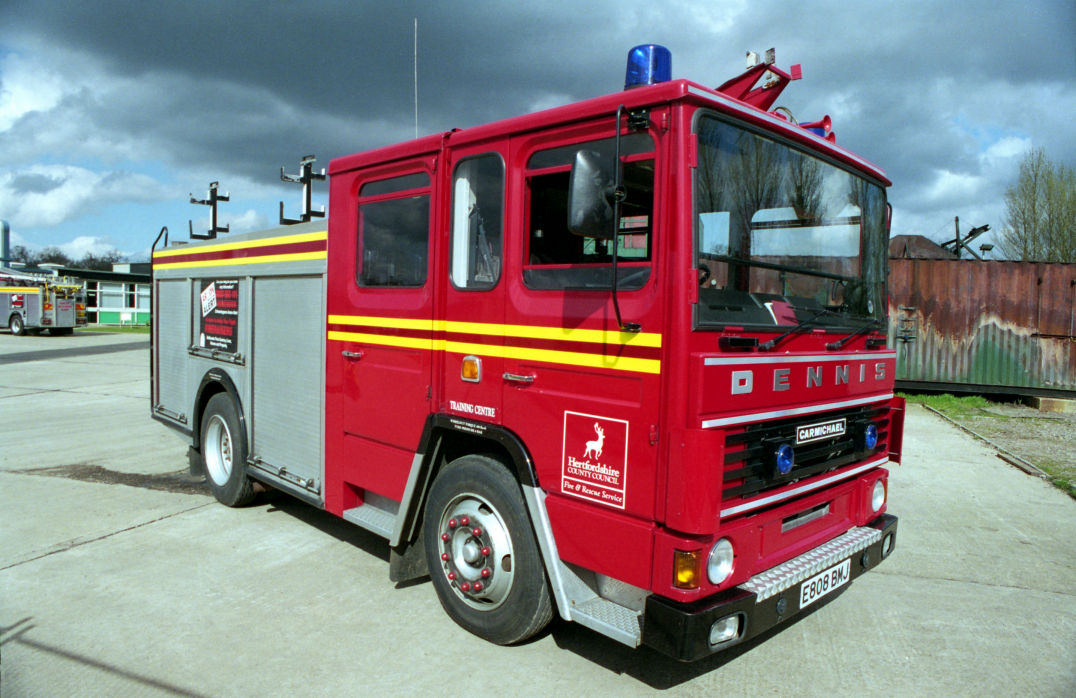
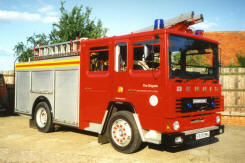
The picture of
E808 BMJ Dennis in the Station Road yard (left)
is a 1988 Dennis DS 153 Carmichael (DS was a shorter
wheel base than the SS). Brand new to the station in
1988 and served until August 2000 when it was
replaced by Dennis SS235
registration K23 APP (first registered December
1992). It is assumed that the picture
of
E808 BMJ was taken when the fire engine was new
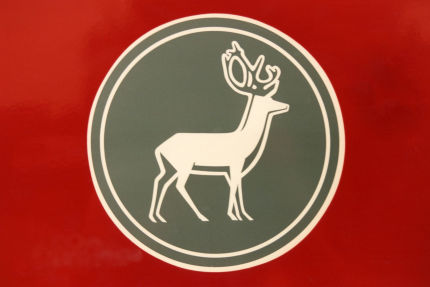
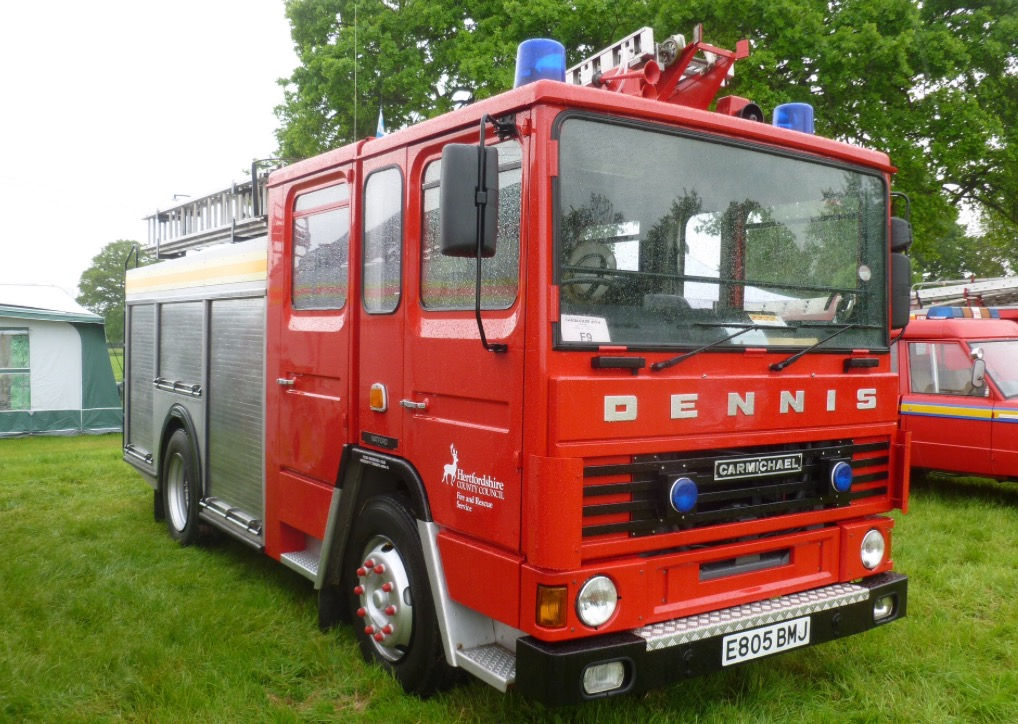
as the badge on the doors changed around 88/89 from
the round one that is displayed to a more linear
badge with the Hart above the words Hertfordshire
County Council (top right). The newer badge is shown on E805 BMJ
(bottom right), obviously
registered at same time but displayed for badge
comparison only. This newer badge lasted into the 2000's
and has been updated couple of times since. With a
Perkins Phaser engine the DS is almost the same as
the SS/RS models but was shorter at 21', and has a
shorter wheelbase of 12'9" which was 20" less. It
was also narrower by 6" at only 7' wide (only room
for single headlamps each side due to the width),
ideally suited to rural stations. The DS succeeded
the previous D series as being a narrow appliance
but has a steel cab rather than wood and fibreglass.
Fixed cab with access panels to access engine. |
|
The photo bottom left is the same appliance after it
finished active service when it had the ladder
removed and used for training at HFRS
Training Centre, Longfields, Stevenage taken in 2001.
Photo with acknowledgement and
supplied by Andy Ballisat - (January 2021) |
| Training Stevenage |
|
|
------------------------------------------------------------------------------------------------------------------------------------------------------------------------------- |
|
|
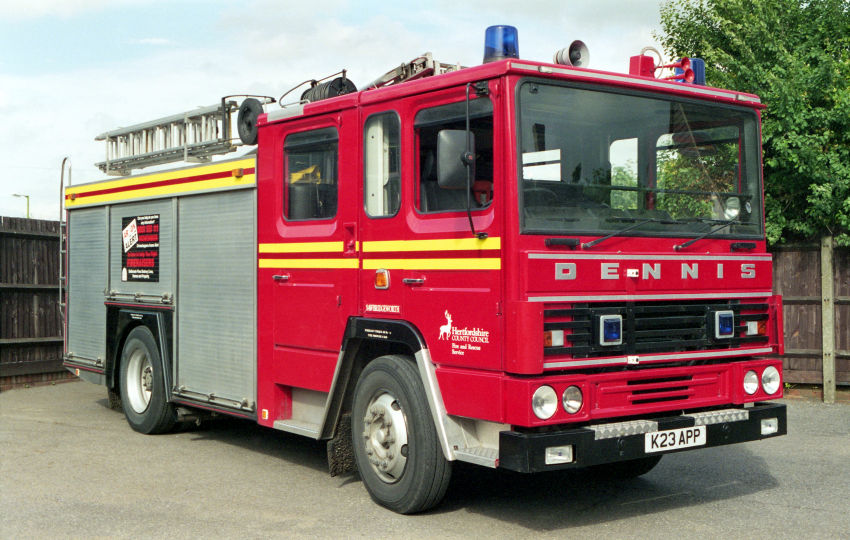
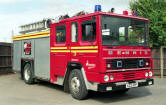
K23 APP
Served at Royston
before Sawbridgeworth.
1992 Dennis SS 235
JDC WrL 8300cc Cummins diesel engine, Godiva model
GMB2700/108 PTO operated pump, 2700l/min. The SS
model has the same cab design as the Dennis DS and
RS models but had a tilting cab to access the
engine, rather than lift out access panels. |
 |
|
Photo with thanks to Andy Ballisat -
February 2021 |
|
|
|
------------------------------------------------------------------------------------------------------------------------------------------------------------------------------- |
|
2002- Mar
2007 |
 |
|
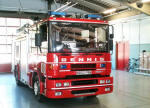
N852 FBM Served at Baldock & Letchworth before
arriving at Sawbridgeworth in 2002, in 2007 she
became a fleet reserve, and then moved on in 2009 to
fire cadets at St Albans. She was finally sold out
of service in May 2014.
1995 Dennis Sabre ML (medium length) 1800l water,
2250l/min Godiva world series pump. Carried 13.5m,
9m, triple extension and roof ladders. |
|
|
------------------------------------------------------------------------------------------------------------------------------------------------------------------------------- |
| Mar 2007 - 2010 |
 |
|
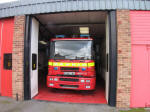
P248 VMJ Came to Sawbridgeworth as a spare and
as it was newer it was subsequently kept as a
replacement for N852 FBM. Went back on to the spares
fleet after Sawbridgeworth got KE53 VFH, before
finally being taken off fleet and sold.
1996 Dennis Sabre XL 1800l water, 2250l/min Godiva
world series pump. Carried 13.5m, 9m, triple
extension and roof ladders. |
|
|
------------------------------------------------------------------------------------------------------------------------------------------------------------------------------- |
| 2010 - Feb 2014 |
 |
 |
|
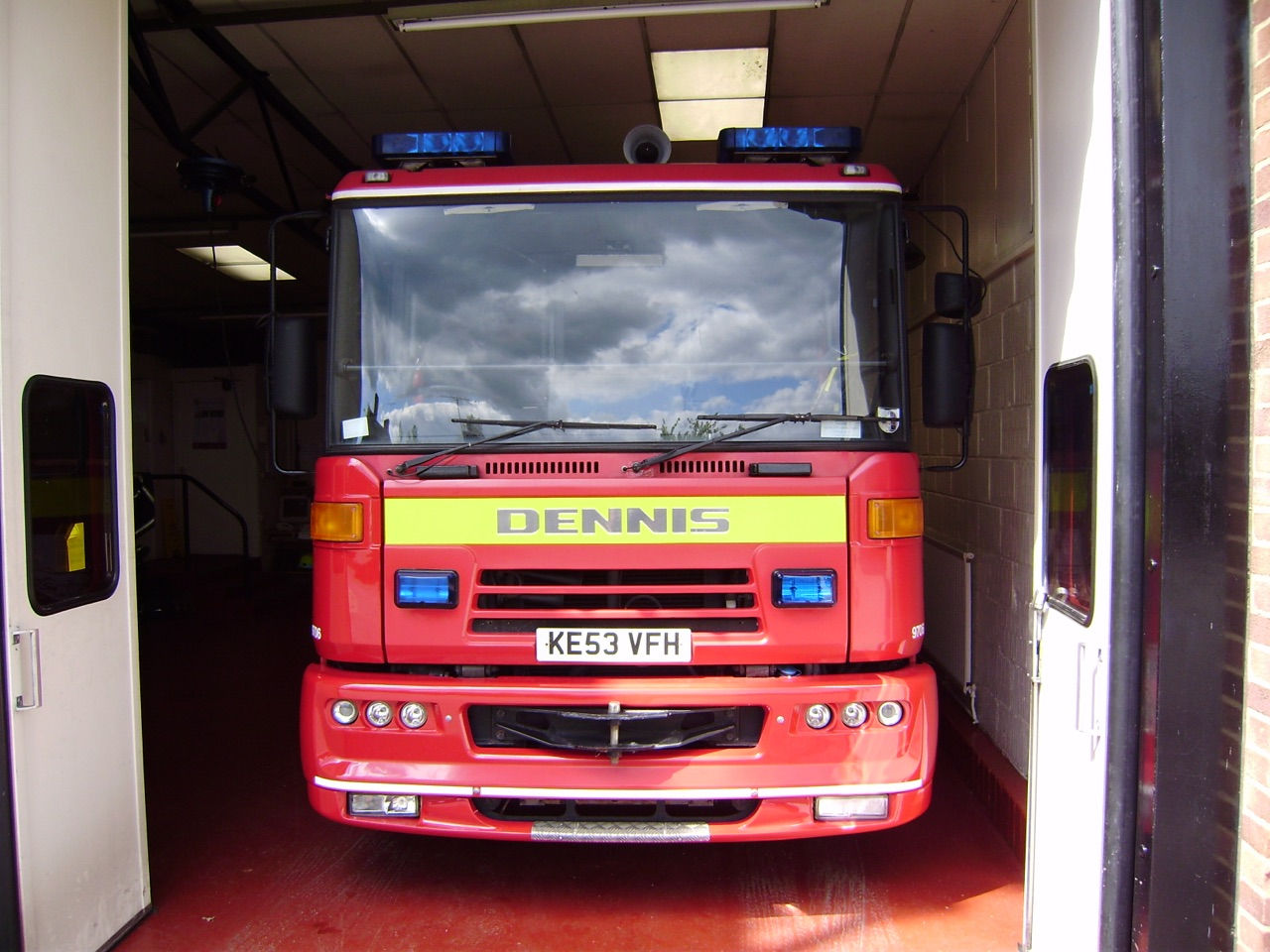
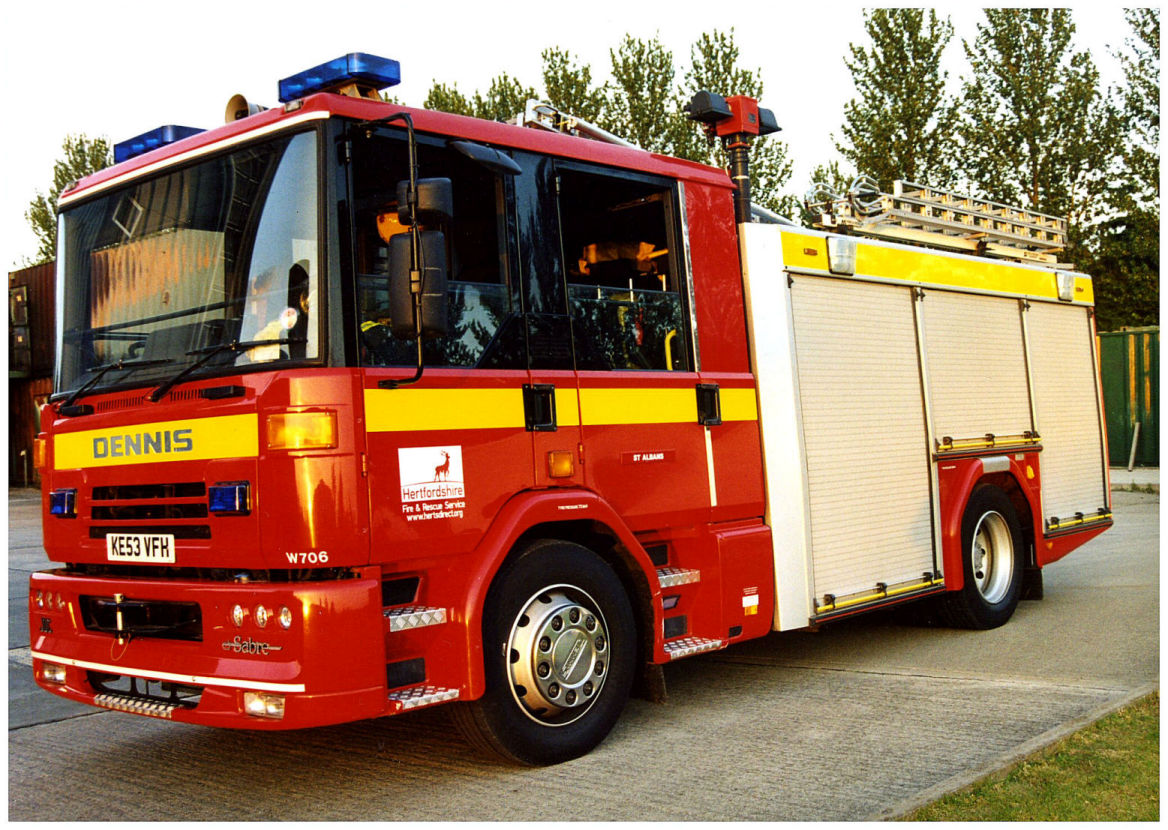
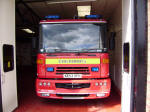
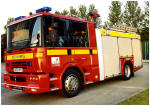
KE53 VFH Served at St Albans before moving to
Sawbridgeworth, now a service spare.
2003 Dennis Sabre ML JDC 1800l water, 2250l/min
Godiva world series pump. Carried 13.5m, 9m, triple
extension and roof ladders.
December 2016 - Sold out of service.
R/H Photo with acknowledgement and
supplied by Andy Ballisat - (November 2023) |
|
|
------------------------------------------------------------------------------------------------------------------------------------------------------------------------------- |
| Feb 2014 - Aug 2015 |
 |
|
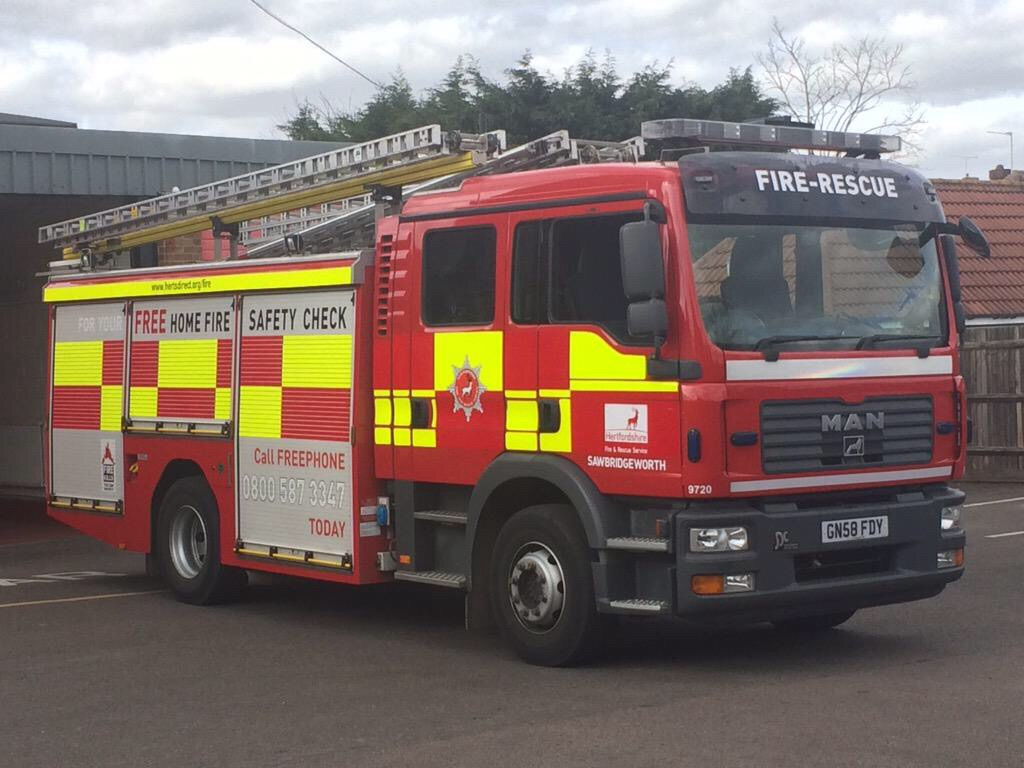
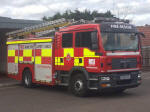
GN58 FDY Served at Bushey, then moved to
Sawbridgeworth following the closure of Bushey, now
at Longfield training centre as a training
appliance. Purchased as a smaller appliance for
retained stations. Marked the end of Dennis
appliances being at Sawbridgeworth. 2008 MAN TGM
12.240 JDC 1800l water, 2250l/min Godiva prima pump.
Carried 13.5m, 9m, triple extension and roof
ladders.
Left from Training centre and became Cadet
firefighters fire engine. Jan 2022 Sold out of
service. |
|
|
------------------------------------------------------------------------------------------------------------------------------------------------------------------------------- |
| Aug 2015 |
 |
|
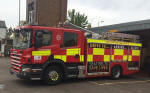
KX59 MGJ Served at Stevenage prior to
Sawbridgeworth.
2009 Scania P270 JDC 9 litre, 270bhp engine, 1800l
water, 2250l/min Godiva prima pump. Carries 13.5m,
9m, triple extension and roof ladders.
Now on the spares fleet, backfilling fire engines
when maintenance or a service is required. |
|
------------------------------------------------------------------------------------------------------------------------------------------------------------------------------- |
| Nov 2021 - current |
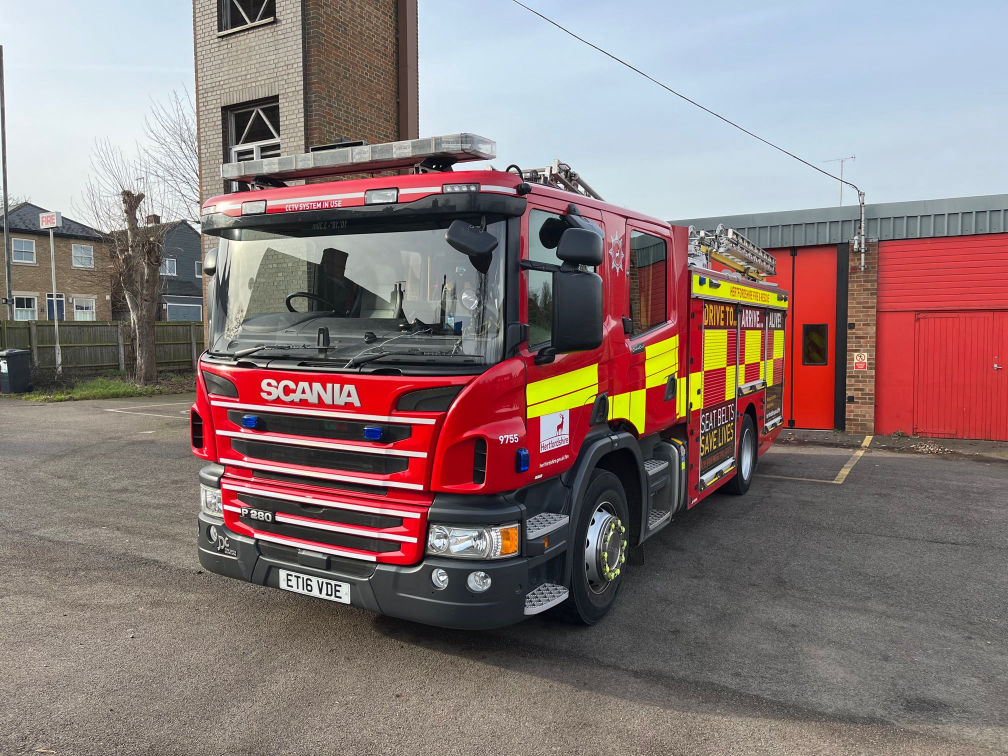
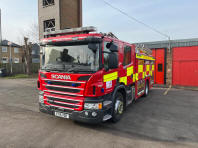
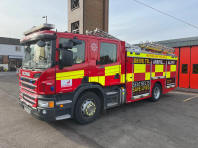
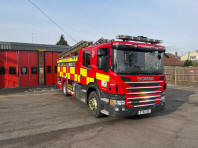
ET16VDE Scania P280. Previously served, from new, at
Rickmansworth. It has a few new features to us, push
button pump controls and digital gauges on a tablet
style screen in pump bay, similar tablet screen in
cab, for light operation, inc scene lights, pelmet
lights and locker lights, that help illuminate in
and around the fire engine. Graphical displays of
lockers open or closed, which lights are on and
seatbelt status. It has a lane avoidance system and
an auto braking system. Battery powered hydraulic
cutting equipment compared to our last petrol engine
driving cutting equipment. Much more manoeuvrable
but a lot heavier as there are more items built into
the tool (battery, hydraulic motor, hydraulic fluid
reservoir). |
 |
 |
 |
|
|
------------------------------------------------------------------------------------------------------------------------------------------------------------------------------- |
|
|
| |
|
|
|
|
|
|
|